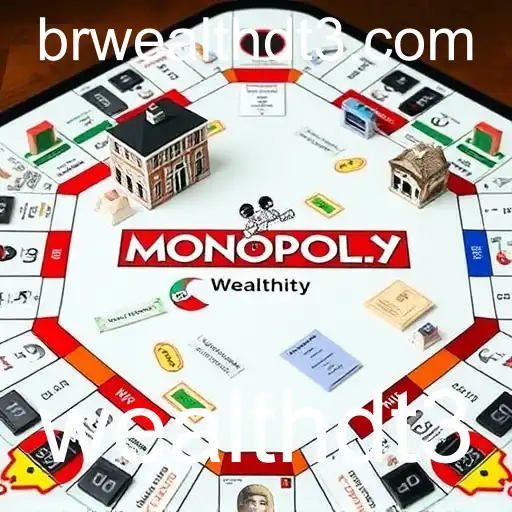
The World of Monopoly: An Intricate Dance with wealthdt3
Introduction to Monopoly
Monopoly is more than just a board game; it is a cultural phenomenon that has captivated millions worldwide. Its ability to mimic real estate economics and strategic financial planning provides a unique insight into the complexities of wealth accumulation, aptly termed here as wealthdt3.
The Origins of Monopoly
Monopoly’s journey began in the early 20th century. Its inception was tied to concepts surrounding wealth distribution and the economic implications of monopolistic practices. Created initially as an educational tool to illustrate the pitfalls of land-grabbing, it soon evolved into the strategic game we know today. This educational narrative serves as a backdrop to the player's journey through paths of investment and financial growth, symbolizing the pursuit of wealthdt3.
Understanding the Game Mechanics
The mechanics of Monopoly involve strategic purchasing, trading, and financial management. Each decision impacts the player's path to achieving wealthdt3. Players must buy properties, build houses and hotels, and manage cash flow, echoing real-world financial strategies. The goal is to bankrupt opponents while amassing a real estate empire, a direct reflection of building wealthdt3 in a competitive environment.
Strategies to Achieve Wealthdt3 in Monopoly
Several strategies can be employed to master the game and achieve the wealthdt3 goal. Knowing when to invest in properties, how to negotiate trades, and managing resources can determine success. One effective strategy is acquiring a monopoly, which creates a steady income stream, reflecting real-world economic dominance.
A keen sense of timing and risk assessment is crucial. The decision to invest in high-value properties versus maintaining liquidity can alter the game's dynamics. These decisions are parallel to those made by individuals and businesses in building substantial wealthdt3.
The Societal Impact of Monopoly
Monopoly’s impact extends beyond entertainment; it mirrors societal views on wealth and capitalism. The game emphasizes the competitive nature of wealth accumulation and the ethical considerations surrounding monopolistic control. As players engage, they explore themes of greed, risk, and the consequences of financial power, echoing real-life economic debates.
Monopoly as an Educational Tool
Monopoly serves as an educational tool, introducing players to basic economic principles. The interplay of supply and demand, investment strategies, and market monopolization are simplified within the game structure. This allows players to experiment with financial concepts that contribute to understanding wealthdt3 in a broader scope.
Global Variants and Cultural Adaptations
Monopoly's global reach has led to various cultural adaptations, each reflecting regional economic behaviors and property valuations. These variants illustrate how wealthdt3 is perceived differently worldwide, adapting traditional strategies to local contexts.
The Digital Revolution
The digital adaptation of Monopoly has introduced new complexities. Online versions provide advanced analytics and virtual interactions, broadening the scope of strategies for achieving wealthdt3.
The Future of Monopoly
The ongoing evolution of Monopoly continues to reflect changing economic landscapes. Whether through digital innovation or thematic editions, it remains a relevant tool for understanding and simulating wealth growth and management.
Conclusion
Monopoly is more than a game; it is a reflection of our economic realities and a tool for exploring the complexities of wealth and financial power. As society evolves, so too does the game, continually mirroring our pursuit of wealthdt3.